简体中文
简体中文 Deutsch
Mold and crack prevention technology

Bamboo Culm Splitting into Strips
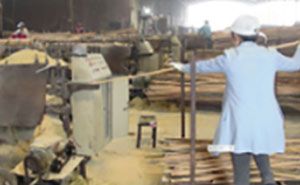
Rough planing
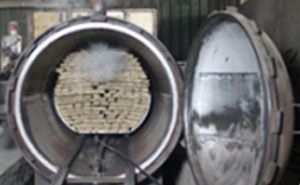
Carbonization
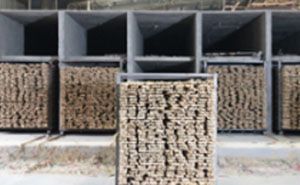
Kiln Drying

Conditioning
Carbonization treatment:
Carbonization treatment is a high temperature and high pressure treatment process that decomposes starch and sugar inside bamboo, destroying the living environment of insects and fungi, and reducing the possibility of insect infestation and mold growth in bamboo; Simultaneously kill any eggs or parasites that may be present in the material;
According to the degree of carbonization, bamboo tends to have a light brown color, a stable and deep color, and a hard layer of carbonized particles on the surface. Bamboo itself will also become harder. Due to the fact that carbonized bamboo is harder than ordinary bamboo, it prevents the surface of bamboo from being vulnerable and causing bamboo spikes;
Before painting, control the moisture content of the white mold to 5-12% and equip it with a dedicated constant temperature and humidity room for mold prevention treatment. The paint is specially developed to have a certain inhibitory effect on mold.
According to the degree of carbonization, bamboo tends to have a light brown color, a stable and deep color, and a hard layer of carbonized particles on the surface. Bamboo itself will also become harder. Due to the fact that carbonized bamboo is harder than ordinary bamboo, it prevents the surface of bamboo from being vulnerable and causing bamboo spikes;
Before painting, control the moisture content of the white mold to 5-12% and equip it with a dedicated constant temperature and humidity room for mold prevention treatment. The paint is specially developed to have a certain inhibitory effect on mold.
Prevent cracking:
The board will undergo strict bonding strength testing, CNC drilling machine, and control the fitting tolerance of the product. The moisture content of the product will be controlled between 5-12%. Environmentally friendly adhesive testing ensures continuous stability of performance and quality.
Quality control
Concept
Customer requirements
Customer data collection and management
Identification and conversion of customer technical requirements and quality standards
Development phase
Development Planning and Review
Tooling & Fixture Development
Development verification
Order Review
Tooling fixture
NPI Schedule & Responsibility Control
Tooling & Fixture Design Review
Debugging of tooling clamps and fixtures
FAI report
NPI Problem Summary & Closure
SPC control
CTQ control
Sample recognition management
Yield improvement
Mass production phase
Feed control
Process Control
Shipment control
Supplier Management
RoHS management
Reliability test
SIP and Quality Standards
Improved detection capability
SPC management
Mismixing and omission management
Quality Exception Handling Mechanism
FIFO management
Identification management
Continuous improvement phase
Customer service
Continuous improvement
Quick response mechanism
Customer visit mechanism
Customer satisfaction survey
8D closed-loop and 2485 principle
Quick response mechanism
Corrective and preventive mechanisms
QPA/QSA
TQM/Quality Activities
Customer Complaint Handling
Receive a complaint
2 hours
- Responding to the reception and handling of customer complaints
- Nonconformity & Traceability Info Collection & Dissemination
- Complaint registration and 8D/CAR report release
24 hours
- Defect Detection, WIP & Process Control
- Suspect Material Isolation, Marking, Counting & Shipping Hold
- Track & Control Suspect Materials (In Transit / Customer Side)
- Sustain Customer Line by Rework, Sorting & Exchange
48 hours
- Root Cause Tracing & Digging
- Develop & Execute Permanent Corrective Actions
- Update Customers on Progress Daily
5 working days
- Effectiveness Verification of Permanent Corrective Actions
- Develop & Implement Preventive Actions
- 8D/CAR report submission
Case closed
- Ongoing Monitor of Customer Line Quality
- Handling of problematic materials
- Lesson Learned & Case Closed
Case closed